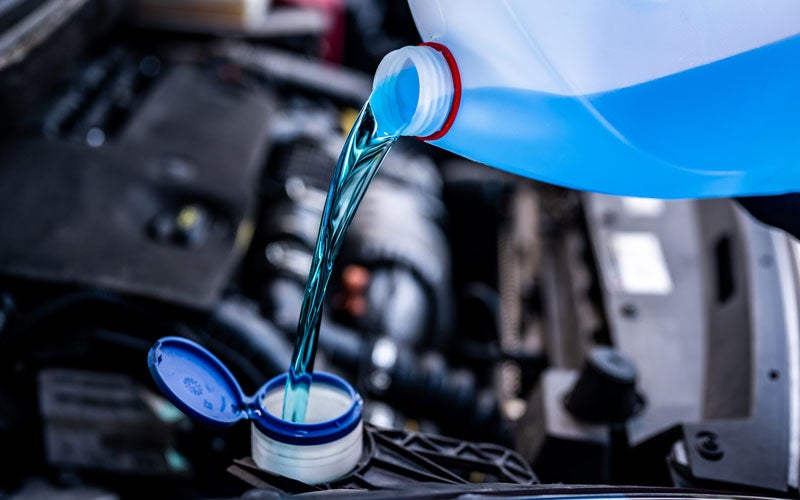



Engine Coolant: The Small Maintenance Detail That Prevents Big Chevrolet Repairs An engine can survive years of highway driving, thousands of starts, and temperatures that would make most machinery surrender. But take away its cooling system, and that durability disappears very quickly. In Eagle Pass, TX, where summer heat puts additional demands on vehicles, engine coolant deserves more attention than it typically receives. It's inexpensive compared with the components it protects, yet neglected coolant can contribute to some of the most costly engine repairs. What Is Engine Coolant? Engine coolant, commonly called antifreeze, is a specially formulated liquid that circulates through the engine and radiator to regulate temperature. Most conventional formulations combine water with ethylene glycol, frequently at a 50/50 concentration. Water transfers heat efficiently, while glycol lowers the freezing point and raises the boiling point of the mixture. Corrosion inhibitors provide additional protection for aluminum, iron, and other cooling-system materials. The correct formulation depends on the vehicle, so coolant should never be selected by color alone. Why Does an Engine Need Coolant? Combustion generates tremendous heat, and only part of that energy becomes mechanical power. The remainder must be managed through the cooling system, exhaust, and surrounding components. Coolant absorbs heat from passages in the engine block and cylinder head before circulating through the radiator, where airflow helps release it. A thermostat regulates coolant flow as operating temperature changes. If circulation stops or coolant levels become critically low, overheating can damage cylinder-head gaskets, warp metal components, and potentially destroy the engine. Are All Coolant Formulations the Same? Coolant chemistry varies considerably. Traditional Inorganic Additive Technology (IAT) formulations use corrosion inhibitors that generally require more frequent replacement. Organic Acid Technology (OAT) formulations provide longer-lasting protection in many modern applications. GM's Dex-Cool is an OAT coolant specified for numerous Chevrolet vehicles. Hybrid Organic Acid Technology (HOAT) combines different inhibitor technologies and appears in certain other manufacturers' vehicles. Color isn't a dependable identification method because manufacturers use different dyes. Consult the owner's manual before adding coolant, and avoid mixing incompatible formulations. When Should Chevrolet Coolant Be Replaced? Many Chevrolet vehicles equipped with Dex-Cool have a recommended coolant replacement interval of up to five years or 150,000 miles, whichever comes first. However, maintenance schedules differ by model, engine, and production year. Severe operating conditions or cooling-system repairs may require earlier attention. Regular Chevrolet coolant inspections can identify deteriorating fluid, contamination, or declining coolant levels. Drivers should follow the maintenance schedule for their specific vehicle instead of assuming one interval applies to every Chevrolet. What Happens During a Professional Coolant Flush? A technician begins by checking the cooling system for leaks, damaged hoses, and other visible problems. Once the engine has cooled, the old coolant is drained and the system serviced according to manufacturer procedures. Flushing may be appropriate when contamination or deposits are present, although some vehicles require a straightforward drain-and-fill instead. The technician then installs the specified coolant mixture, removes trapped air using the correct procedure, and checks system operation. Professional cooling-system service can also identify a failing thermostat, water pump, or radiator component before it causes overheating. Can You Simply Add More Coolant? A slightly low reservoir can sometimes be topped off using the manufacturer's specified coolant, provided the engine is completely cool. However, repeated coolant loss isn't normal. The cooling system is designed to retain its fluid, so frequent additions suggest a leak or another problem requiring diagnosis. Adding water alone can reduce corrosion protection and alter the mixture's temperature limits. A coolant leak inspection is advisable when the level continues dropping. Correcting the underlying problem is more important than repeatedly filling the reservoir. Schedule Chevrolet Cooling-System Service in Eagle Pass Engine coolant rarely attracts attention until something goes wrong, but maintaining the correct fluid and inspecting the system can prevent serious mechanical damage. Brown Chevrolet Eagle Pass offers engine coolant replacement, cooling-system inspections, and diagnostic service for Chevrolet vehicles. Then schedule your service appointment online today to have the system checked before a minor coolant problem becomes a major engine repair.