


Brown Chevrolet of Eagle Pass

Blog / Brown Chevrolet Buick GMC of Eagle Pass Service

Brakes Squealing? Essential Brake Maintenance Tips

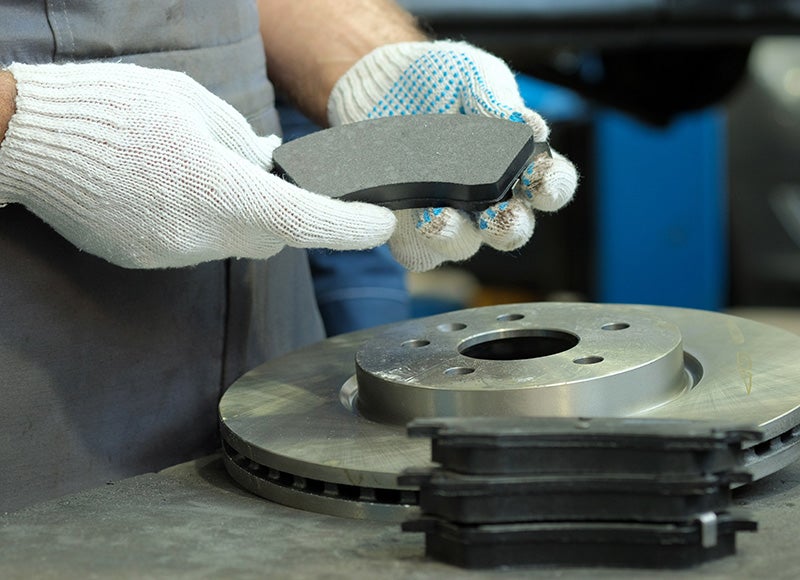
Brake pads - Brakes Squealing? Essential Brake Maintenance Tips

Have you noticed your brakes squealing? Brake maintenance is one of the most critical aspects of vehicle care, ensuring your safety and enhancing your car's performance. Proper brake maintenance not only extends the lifespan of your vehicle but also prevents costly repairs. For drivers in Eagle Pass, Texas, keeping your brakes in top condition is especially important, given the varied driving conditions in the area.  

If you've noticed your brakes squealing or a decrease in stopping power, it might be time to consider professional brake servicing. Understanding how brakes work and when to address issues is key to maintaining optimal vehicle performance.  

Brakes and Brake Pad FAQ  

Maintaining your brakes starts with understanding their basic components and functions. Here are some of the most frequently asked questions about brakes and brake pads:  

1. What are the signs of worn-out brake pads?  

Common indicators include brakes squealing, a grinding noise when braking, or a longer stopping distance.  

2. How often should brake pads be replaced?  

Brake pad replacement depends on your driving habits and the type of pads used, but a general rule is every 25,000 to 65,000 miles.  

3. What causes brakes to squeal?  

Squealing brakes often result from worn brake pads or a lack of lubrication on the brake components. This noise is a clear sign that your brakes require attention.  

By addressing these FAQs, you can ensure your vehicle stays reliable and safe on the roads of Eagle Pass, TX.  

When to Get Brake Service 

Knowing when to service your brakes can make a significant difference in your vehicle's overall health. Early detection of issues such as brakes squealing or reduced responsiveness can save you time and money.  

Here are some key moments to schedule brake maintenance:  

- Noise Detection: If you hear unusual sounds like squealing or grinding, it’s time to check your brakes.  

- Vibrating Brake Pedal: A pulsating brake pedal could indicate warped rotors.  

- Dashboard Warning Lights: Modern vehicles often include brake system warning lights.  

- Mileage Milestone: Regular inspections every 10,000-15,000 miles will help catch issues before they become severe.  

Whether you're driving around Eagle Pass, TX, or planning a trip, keeping your brakes in check ensures a safer ride for you and your passengers.  

Different Brake Components and Their Roles  

Understanding the various components of your braking system is vital for comprehensive brake maintenance. Here’s a breakdown of the main parts:  

1. Brake Pads: These create the friction needed to slow your car down. Keeping them in good condition is crucial to avoid brakes squealing or failing altogether.  

2. Rotors: Rotors work with brake pads to stop your wheels from spinning. Warped rotors can lead to vibrations and reduced braking efficiency.  

3. Brake Fluid: This hydraulic fluid transfers the force from your pedal to the brake components. Low or contaminated fluid can compromise your braking system.  

Each of these components plays a unique role, and neglecting any one of them can impact your vehicle's ability to stop effectively. In Eagle Pass, TX, reliable brake maintenance services are available to keep all these parts functioning seamlessly. 

For vehicle owners in Eagle Pass, TX, regular brake maintenance is essential for safety, peace of mind, and extending the life of your car. Whether your brakes are squealing or you're due for routine service, expert technicians are ready to assist. 

Visit Brown CGB Eagle Pass to schedule your brake inspection and enjoy confidence on the road. 
Posted in:

Related Posts

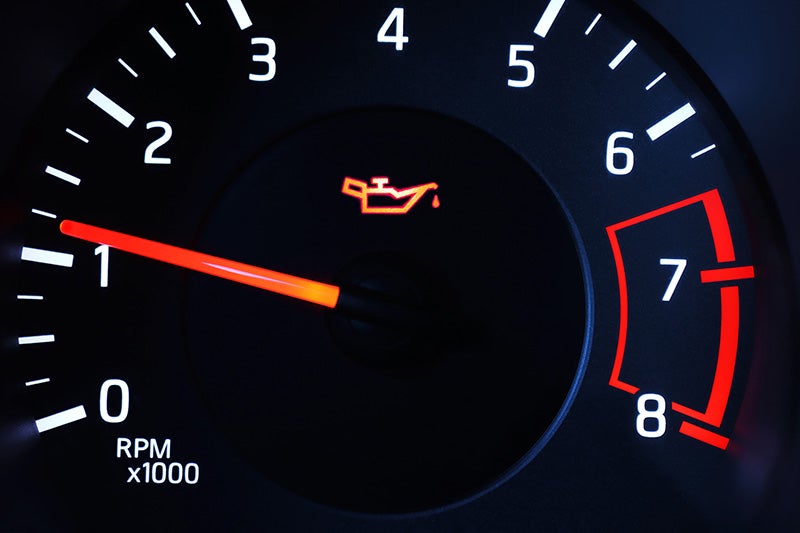
An oil light indicator - Oil Changes in Eagle Pass, TX and Why They Are Essential

Oil Changes in Eagle Pass, TX and Why They Are Essential

Oil, Engines, and the Moment That Little Light Ruins Your Day About oil changes - There is a very specific kind of mechanical tragedy that unfolds quietly. No explosions. No dramatic roadside smoke signals. Just a small dashboard icon glowing with the emotional warmth of a disappointed teacher. That is your oil warning light, and in performance terms it matters far more than most drivers realize. Engine oil is not simply lubrication. It is a working fluid tasked with managing heat, protecting tolerances measured in fractions of a millimeter, and carrying away microscopic debris generated every time internal components move at several thousand revolutions per minute. In warm climates like Eagle Pass, TX, where extended heat cycles are common, oil stability becomes even more critical to long-term engine health. Why Oil Changes Are a Performance Conversation Fresh oil maintains a consistent lubricating film between moving surfaces. Once that film degrades, friction increases. Increased friction means elevated temperatures. Elevated temperatures accelerate wear. From a driving perspective, that translates into subtle but real losses in smoothness, efficiency, and responsiveness long before catastrophic failure ever enters the picture. Modern synthetic oils extend service intervals significantly, often reaching 7,500 to 10,000 miles in many vehicles. Conventional oils typically require more frequent replacement, sometimes as soon as 3,000 miles depending on usage patterns. Short urban drives, heavy towing, and extreme temperatures can all shorten these intervals further. When the Oil Light Appears, the Clock Starts An illuminated oil warning light is not a gentle suggestion. It is the vehicle signaling that lubrication pressure or oil quality has dropped to a level that risks mechanical damage. Continuing to drive extensively in that condition can allow accelerated component wear or, in severe cases, internal engine seizure. Responding quickly is not just preventative maintenance. It is performance preservation. Engines that receive consistent oil service tend to deliver smoother power delivery, improved fuel efficiency, and longer operational life. Long-Term Consequences of Skipping Oil Changes Old oil oxidizes and thickens. Contaminants accumulate. Sludge formation can restrict vital oil passages. Over time, this degrades valve timing precision, piston ring sealing, and bearing integrity. The result is often reduced drivability first, followed by increasingly expensive repairs later. Routine oil changes remain one of the simplest mechanical decisions that deliver measurable long-term value. Keep Your Engine Operating as Intended If your oil light appears or your service interval approaches, scheduling maintenance promptly helps ensure your engine continues to operate with the refinement and durability it was engineered to deliver. Visit Brown CGB Eagle Pass for professional oil service guidance and experienced technicians who understand how proper lubrication supports both everyday dependability and sustained mechanical performance.

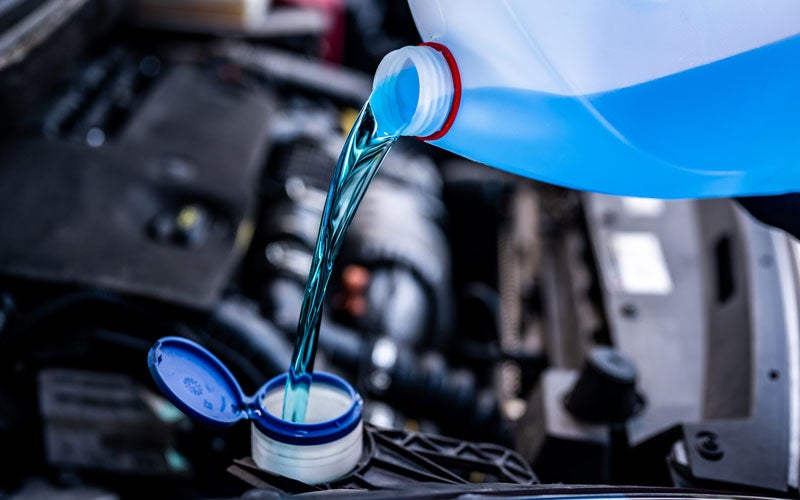
Engine Coolant FAQ: What It Is & When to Flush

Engine Coolant FAQ: What It Is & When to Flush

Engine Coolant: The Small Maintenance Detail That Prevents Big Chevrolet Repairs An engine can survive years of highway driving, thousands of starts, and temperatures that would make most machinery surrender. But take away its cooling system, and that durability disappears very quickly. In Eagle Pass, TX, where summer heat puts additional demands on vehicles, engine coolant deserves more attention than it typically receives. It's inexpensive compared with the components it protects, yet neglected coolant can contribute to some of the most costly engine repairs. What Is Engine Coolant? Engine coolant, commonly called antifreeze, is a specially formulated liquid that circulates through the engine and radiator to regulate temperature. Most conventional formulations combine water with ethylene glycol, frequently at a 50/50 concentration. Water transfers heat efficiently, while glycol lowers the freezing point and raises the boiling point of the mixture. Corrosion inhibitors provide additional protection for aluminum, iron, and other cooling-system materials. The correct formulation depends on the vehicle, so coolant should never be selected by color alone. Why Does an Engine Need Coolant? Combustion generates tremendous heat, and only part of that energy becomes mechanical power. The remainder must be managed through the cooling system, exhaust, and surrounding components. Coolant absorbs heat from passages in the engine block and cylinder head before circulating through the radiator, where airflow helps release it. A thermostat regulates coolant flow as operating temperature changes. If circulation stops or coolant levels become critically low, overheating can damage cylinder-head gaskets, warp metal components, and potentially destroy the engine. Are All Coolant Formulations the Same? Coolant chemistry varies considerably. Traditional Inorganic Additive Technology (IAT) formulations use corrosion inhibitors that generally require more frequent replacement. Organic Acid Technology (OAT) formulations provide longer-lasting protection in many modern applications. GM's Dex-Cool is an OAT coolant specified for numerous Chevrolet vehicles. Hybrid Organic Acid Technology (HOAT) combines different inhibitor technologies and appears in certain other manufacturers' vehicles. Color isn't a dependable identification method because manufacturers use different dyes. Consult the owner's manual before adding coolant, and avoid mixing incompatible formulations. When Should Chevrolet Coolant Be Replaced? Many Chevrolet vehicles equipped with Dex-Cool have a recommended coolant replacement interval of up to five years or 150,000 miles, whichever comes first. However, maintenance schedules differ by model, engine, and production year. Severe operating conditions or cooling-system repairs may require earlier attention. Regular Chevrolet coolant inspections can identify deteriorating fluid, contamination, or declining coolant levels. Drivers should follow the maintenance schedule for their specific vehicle instead of assuming one interval applies to every Chevrolet. What Happens During a Professional Coolant Flush? A technician begins by checking the cooling system for leaks, damaged hoses, and other visible problems. Once the engine has cooled, the old coolant is drained and the system serviced according to manufacturer procedures. Flushing may be appropriate when contamination or deposits are present, although some vehicles require a straightforward drain-and-fill instead. The technician then installs the specified coolant mixture, removes trapped air using the correct procedure, and checks system operation. Professional cooling-system service can also identify a failing thermostat, water pump, or radiator component before it causes overheating. Can You Simply Add More Coolant? A slightly low reservoir can sometimes be topped off using the manufacturer's specified coolant, provided the engine is completely cool. However, repeated coolant loss isn't normal. The cooling system is designed to retain its fluid, so frequent additions suggest a leak or another problem requiring diagnosis. Adding water alone can reduce corrosion protection and alter the mixture's temperature limits. A coolant leak inspection is advisable when the level continues dropping. Correcting the underlying problem is more important than repeatedly filling the reservoir. Schedule Chevrolet Cooling-System Service in Eagle Pass Engine coolant rarely attracts attention until something goes wrong, but maintaining the correct fluid and inspecting the system can prevent serious mechanical damage. Brown Chevrolet Eagle Pass offers engine coolant replacement, cooling-system inspections, and diagnostic service for Chevrolet vehicles. Then schedule your service appointment online today to have the system checked before a minor coolant problem becomes a major engine repair.

Trax vs Ford Escape: 2027 Compact SUV Compared

Trax vs Ford Escape: 2027 Compact SUV Compared

2027 Trax vs Ford Escape: Which Compact SUV Comes Out on Top? Smart SUV shoppers want modern technology, everyday comfort, and lasting dependability. Comparing the 2027 Chevrolet Trax and the Ford Escape highlights two distinct paths in the crossover market, especially since Ford ended Escape production after the 2026 model year while the Trax continues into 2027. Drivers in Eagle Pass, TX can contact Brown Chevrolet for more information and a closer look at how these two SUVs compare across the categories that matter most. Engine Power The 2027 Chevrolet Trax runs on a turbocharged 1.2L three-cylinder engine generating 137 horsepower and 162 pound-feet of torque, paired with a responsive six-speed automatic transmission. The outgoing 2026 Ford Escape features a standard 1.5L turbocharged three-cylinder engine producing 181 horsepower and 190 pound-feet of torque with an eight-speed automatic transmission. While the Escape delivers higher output on paper, the Trax provides smooth, predictable gear shifts for city driving and highway merging. Technology The 2027 Trax excels at accessible cabin connectivity. Base LS and 1RS trims feature an 8" touchscreen, while LT, 2RS, and ACTIV trims come standard with an 11" HD touchscreen. Every Trax includes standard wireless Apple CarPlay© and Android Auto©, plus available wireless phone charging and a built-in Wi-Fi© hotspot. The Ford Escape also includes standard wireless Apple CarPlay© and Android Auto© on its base 8" display, with an available 13.2" screen reserved for select configurations. Interior Space Both crossovers comfortably seat five passengers. The 2027 Trax maximizes its footprint with an open cabin design and 38.7 " of rear legroom. The Ford Escape stretches out with a slightly longer wheelbase, offering up to 40.7 " of rear legroom in gas-powered models. Both vehicles accommodate families with ease, though taller backseat passengers gain a bit more legroom in the Escape. Cargo Space The 2027 Trax provides 25.6 cubic feet of cargo room behind the rear seats and expands to 54.1 cubic feet with the 60/40 split-folding rear seats lowered. Because the Ford Escape sits in a larger size class, its gas models hold 37.5 cubic feet behind the second row and up to 65.4 cubic feet with the rear seats folded. Shoppers hauling bulky gear will notice the Escape's extra volume, while the Trax balances generous storage with easy city parking. Fuel Efficiency Daily commuters will find strong fuel economy in both SUVs. The front-wheel-drive 2027 Chevrolet Trax earns an EPA-estimated 30 MPG combined. The front-wheel-drive Ford Escape with the 1.5L engine also delivers competitive efficiency for weekday commutes and weekend road trips. Reliability Chevrolet backs the 2027 Trax with a proven powertrain, standard Chevy Safety Assist, and a nationwide certified service network. Because the Trax remains in active production while the Escape ended after 2026, choosing the Trax also means driving a current nameplate with ongoing model support. Find Your Next SUV in Eagle Pass, TX The 2027 Chevrolet Trax stands out with bold styling, intuitive cabin technology, and smart everyday efficiency. Visit Brown Chevrolet in Eagle Pass, TX to explore our online inventory, compare trim options, or schedule a test drive today.